A head full of ideas after the researchED National Conference

Yesterday I was at the researchED National Conference in London. While I have been to many researchED events around the country, I think this was my fourth visit to Parliament Hill School for the national conference. What a great conference it was! Coming away from it also made me pause to consider what I value so much about these events.
Why I keep coming back
Part of it is the palpable sense of community. There is something energising about being surrounded by people who care deeply about education and are willing to share their thinking and have it challenged by others.
I have always enjoyed engaging with educational research and try to keep up with it as much as I can through X, LinkedIn and elsewhere. However, the sheer breadth and volume of research make it impossible to keep abreast of everything. researchED provides a way into research I might otherwise have missed, with speakers helping to explain its significance and consider what it might mean in practice.
There is also something different about hearing people discuss research first-hand. It provides an opportunity to hear the debate around the findings and consider different interpretations. I can then take time to reflect and distil what the research might mean for my own practice and for the way I support others.
Perhaps one of the things I value most is having my own thinking challenged. It almost holds me to account and sometimes means asking myself difficult questions. Why do I do something in a particular way? Is it because there is a sound reason for it, or simply because I have always done it that way? Is my decision being shaped by time pressures? Are there assumptions or unconscious biases that I need to recognise and reflect on? That process is not always comfortable, but it is important.
Then there are the people. researchED provides an opportunity to meet those working in different schools and hear about experiences beyond our own contexts. It is also a chance to reconnect with former colleagues and spend time with friends. It may be described as networking, but it feels like much more than that. It is that sense of being part of a wider education community that I really value.
137 sessions, but time for only six
Yesterday’s programme was vast, as always. Whilst that is of course brilliant, it is also frustrating in some ways, simply because there are so many amazing sessions and you can choose only six. The scale of researchED is difficult to appreciate until you look closely at the timetable. Across the day, 137 sessions were available, with as many as 23 taking place at the same time. I could attend just six.
Pause for a moment to consider all the different routes that could be taken through the programme. Two people could attend the same conference and experience completely different days. It explains why I can come away with so much to reflect on while knowing that I have encountered only a small part of what was shared.
Six sessions, plenty of questions and some very busy neurons
I started the day with Sam Crome, author of The Power of Teams exploring the Cognitive Scienc of Leadership and Teams. Sam explored the disconnect between what we know about how students learn and how we often lead and develop staff. In the classroom, we think carefully about minimising extraneous cognitive load and providing opportunities to revisit learning. Yet, when working with staff, we can present a large amount of information in a single meeting and expect it all to be understood, remembered and acted upon.

Professional development can also become a series of individual sessions that we do not necessarily return to. How often do we think about building a professional development curriculum in which ideas are carefully sequenced and revisited over time? I have seen this done brilliantly in the past by past colleagues such as Lindsey Bennett, but how widely is it considered when schools plan professional learning?
I also attended several sessions on AI. My second session was with Daisy Christodoulou, who spoke about AI and assessment. What an insightful session. Daisy is always inspirational to hear and, wow, this gave a real sense of the potential of AI while remaining grounded about where its limits currently lie. This one really got the neurons sparking and left me with lots to reflect on.
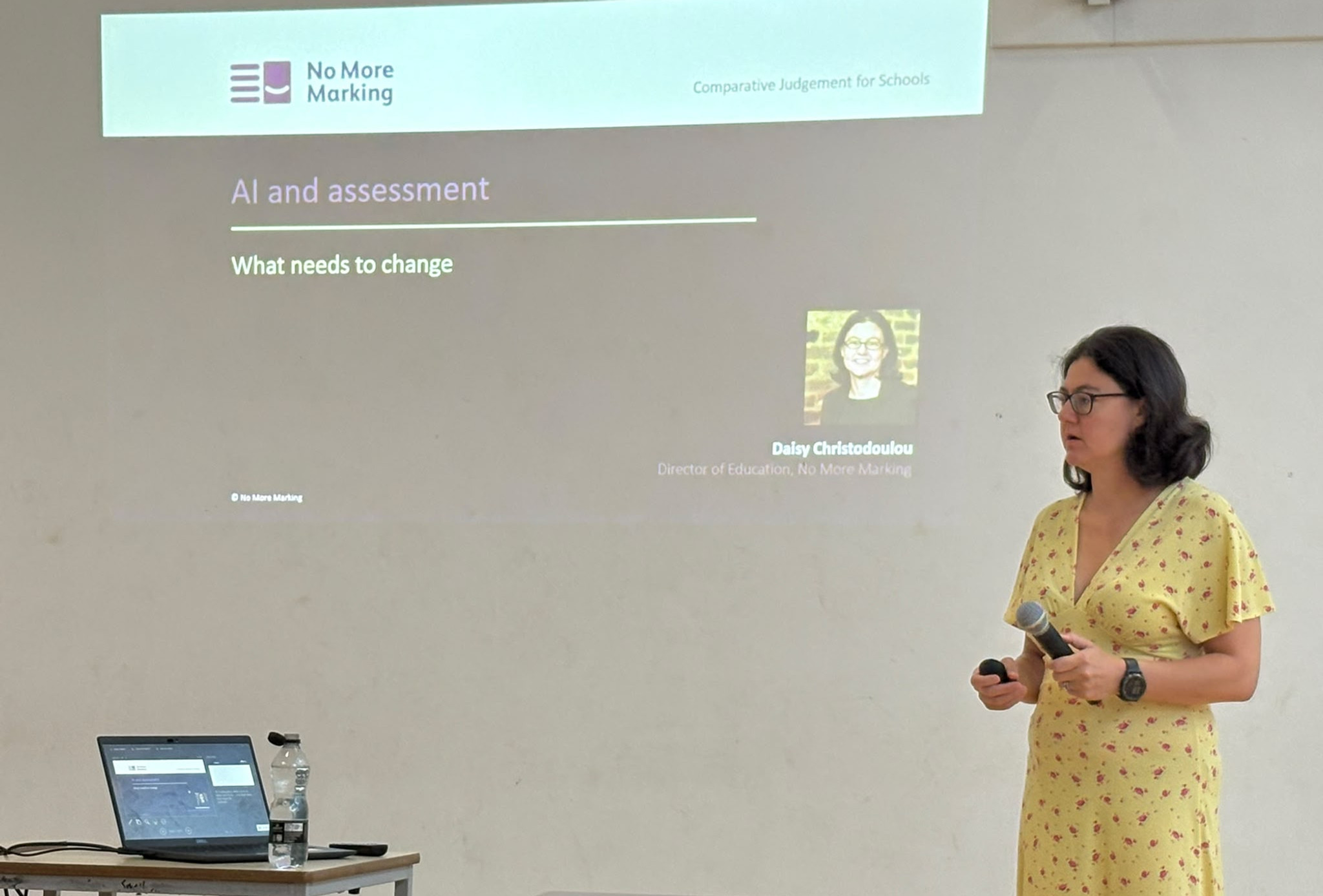
AI cannot be ignored. It is already here and it is not going away. Daisy’s session explored what this means for some of the practices that have traditionally shaped education, particularly homework, assessment and feedback. How might schools respond? Which uses of AI might we embrace because they genuinely support teachers and students, while remaining mindful of its limitations and the risks involved? The session moved beyond whether we should use AI and instead asked us to consider how it is changing education and how we might respond.
It was also great to finally meet Catherine Priggs and Steve Mastin. They ran a brilliant session entitled Cart Before the Horse: Curriculum, Assessment and the New Programmes of Study. They explored the importance of putting curriculum before assessment and what can happen when assessment begins to drive the curriculum rather than serve it.

There were so many important points discussed during this session. They considered how we can recognise when this is happening and what can be done to address it. Subject-sensitive leadership is vital here. Effective line management should protect the curriculum, ensure that curriculum leaders are heard and prevent important subject conversations from becoming generic ones. Ultimately, the subject discipline should shape the curriculum, and the curriculum should then shape assessment. and we need to be alert to the risk that generic whole-school approaches can reverse that order and undermine the integrity of the subject curriculum.
My fourth session was with Jade Pearce, who carefully explained what adaptive teaching is and how it differs from differentiation. Adaptive teaching is about responding to pupils’ understanding, rather than planning separate activities around perceived needs. This might involve providing additional support or greater challenge, and adaptations might be made for an individual pupil, a group or the whole class. Importantly, adaptive teaching is both proactive and reactive.

I have written on Substack about the importance of intellectual preparation, and Jade’s session really consolidated my thinking. Intellectual preparation supports the proactive side of adaptive teaching because it allows teachers to anticipate likely misconceptions and points of difficulty. It also makes effective responses in the moment more manageable. Teaching already carries a high cognitive load, but careful preparation gives teachers a stronger foundation from which to notice pupils’ understanding and respond to it. Jade provided many practical examples of what this might look like, including adapting explanations, questions and modelling, as well as making decisions about chunking and the support provided.
InnerDrive has always been a highlight of the researchED events I have attended. It was great to be in the audience for a live version of The Science of Learning podcast, hosted by Brad Busch, complete with his well-practised introduction! He was joined by a stellar panel comprising Jade Pearce, Daisy Christodoulou, Jon Hutchinson and Sarah Cottinghatt.

Each panellist unpacked a recent research article and considered what its findings might mean in practice. The discussion ranged from AI and belonging to the relationship between the amount of contact teachers have with pupils and the quality of those interactions. This was another session that sent my thinking in several different directions. There is plenty to unpack from this session alone.
My final session was with the brilliant Claire Badger, Head of Teacher Professional Development at InnerDrive. Claire explored some of the latest research into AI in education, focusing first on student learning and AI detection before moving on to feedback and marking. Once again, it gave me plenty to reflect on and debate, while complementing the ideas raised in the earlier sessions.

From listening to reflection
I’m taking some time this morning just to begin processing everything I heard. Over the coming days, I will start trying to distil those thoughts into a series of articles looking at the implications for teaching and learning practice, leadership and curriculum development, as well as the future of education in an AI world.
For now, I just need a moment to reflect and work out where to start!


Comments